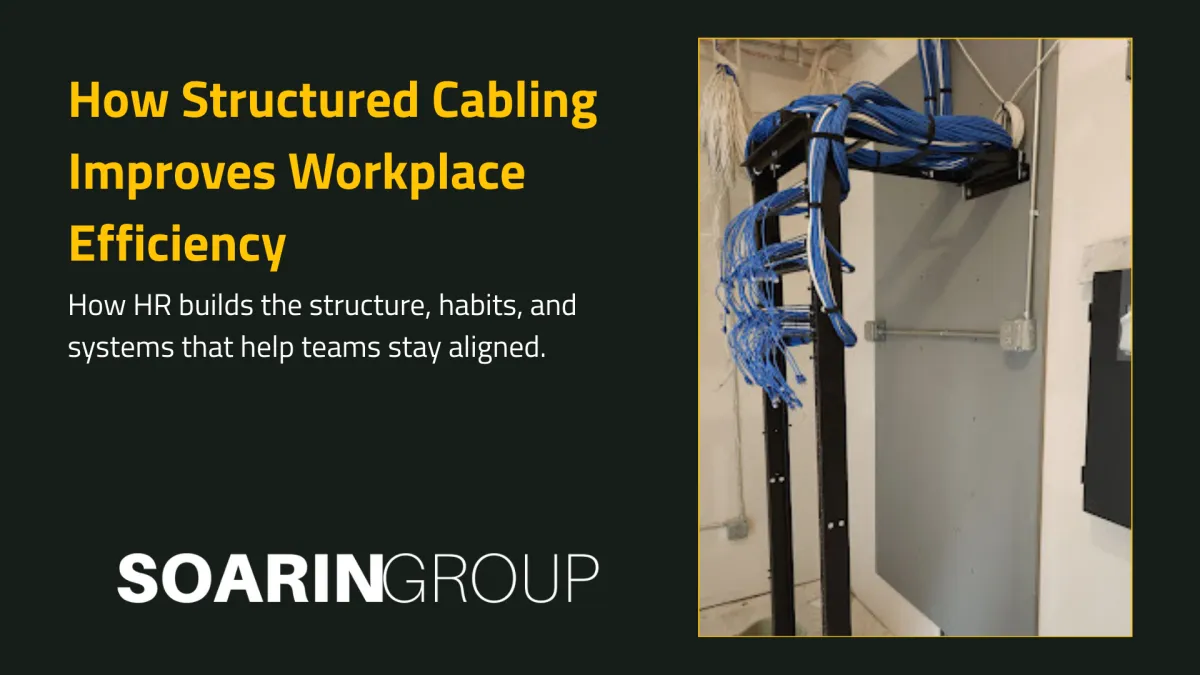
How Structured Cabling Improves Workplace Efficiency
How Structured Cabling Improves Workplace Efficiency
Every business relies on technology, from phones and computers to cloud applications and video calls. But behind all of those tools is something most people never think about: the cabling.
Structured cabling is the standardized, organized method of wiring a building to support all your communication and data needs. Instead of a tangle of cables plugged in wherever they fit, structured cabling uses a clean, planned system that keeps everything organized, labeled, and optimized for performance.
The result? A faster, more efficient workplace from top to bottom.
Here’s how structured cabling improves workplace efficiency and why it’s a foundational investment for growing businesses.
⚡ 1. Faster, More Reliable Network Performance
When your cabling is properly installed, routed, and tested, your network runs smoother.
Structured cabling reduces:
Lag during video calls
Slow file transfers
Internet drops
Bandwidth bottlenecks
This means your team spends less time waiting for pages to load, and more time getting work done.
🧩 2. Easier Troubleshooting & Faster Repairs
Messy, unlabeled cables slow down IT support. Structured cabling solves this by ensuring:
Every cable is labeled
Every connection is mapped
Racks and patch panels are organized
Technicians can instantly identify issues
That means shorter downtime, quicker fixes, and lower maintenance costs.
🏗️ 3. Supports a Clean, Organized Workspace
Cabling clutter is more than an eyesore, it’s inefficient. Structured cabling keeps equipment rooms, server racks, and workspaces:
Clean
Safe
Easy to navigate
Professionally organized
This reduces safety hazards, prevents accidental unplugging, and extends the lifespan of your hardware.
📈 4. Scales Easily With Business Growth
Adding new employees, devices, or office space shouldn’t require tearing your network apart.
With structured cabling, you can scale effortlessly because:
Extra capacity is built in
Adding new drops is simple
The layout supports future upgrades
You won't need a full overhaul
Your network grows as you grow, without disruption.
☁️ 5. Improves Performance of Cloud & VoIP Tools
Businesses run on cloud platforms, video conferencing, and VoIP phone systems.
Structured cabling gives these tools:
The bandwidth they need
Stable connection quality
Fewer dropped calls
Better speed and responsiveness
Modern work requires reliable connectivity, structured cabling delivers it.
🔐 6. Reduces Long-Term Costs
While structured cabling is an upfront investment, it saves money long-term by:
Preventing downtime
Reducing IT labor hours
Minimizing equipment wear
Delaying the need for larger upgrades
Efficiency today = savings tomorrow.
✅ The Bottom Line
Your technology is only as strong as the cabling behind it.
Structured cabling creates a more efficient, organized, and future-ready workplace by improving performance, minimizing downtime, and supporting growth.
At Soarin Group, we design and install structured cabling systems that give businesses in Florida, Nebraska, and across the US the reliable foundation they need to work smarter, not harder.