What IT Compliance Really Means for Small Businesses
 By Tom Nielsen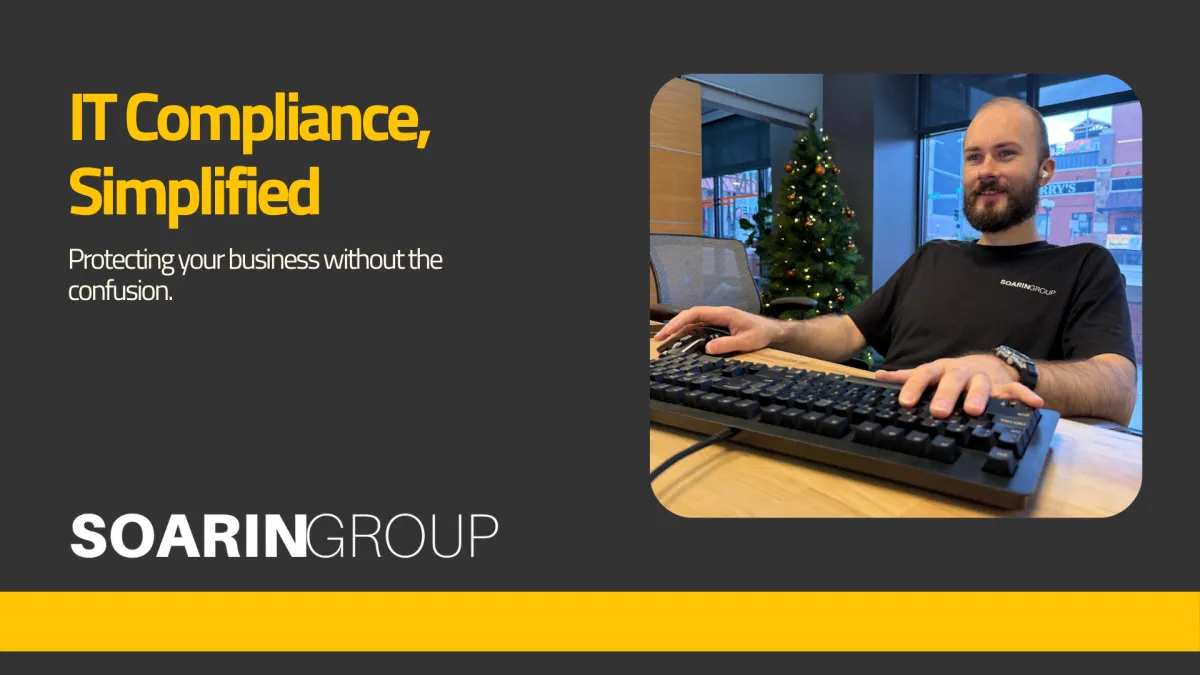
What Does “IT Compliance” Actually Mean for Small Businesses?
Plain-English guidance without the legal jargon
When small business owners hear the word compliance, it often sounds intimidating — expensive audits, complicated rules, and paperwork meant for large corporations.
In reality, IT compliance for small businesses is much simpler, and more manageable than most people think.
At its core, IT compliance is about protecting data, managing risk, and following basic rules designed to keep information secure.
What IT Compliance Really Means
IT compliance means your business follows specific technology and data-security requirements set by laws, industry standards, or contracts.
These rules exist to ensure that:
• Sensitive data is protected
• Systems are secure
• Access is controlled
• Incidents are handled properly
• Risks are identified and reduced
Compliance isn’t about being perfect, it’s about being responsible and prepared.
Common IT Compliance Frameworks Small Businesses Encounter
You may not realize it, but many small businesses are already subject to IT compliance rules.
Some common examples include:
HIPAA
Applies to healthcare providers, practices, and any business handling protected health information (PHI).
PCI-DSS
Required for businesses that process, store, or transmit credit card payments.
SOC 2 (Vendor Requirements)
Often required when working with larger companies or government entities that need assurance your systems are secure.
State & Data Privacy Laws
Many states require businesses to safeguard personal data and report breaches properly.
Even if you’re not legally required to follow a specific framework, clients and partners may still expect compliance-level security practices.
What IT Compliance Looks Like in Practice
For small businesses, compliance usually involves:
• Strong password and MFA policies
• Controlled access to systems and data
• Secure backups and disaster recovery plans
• Regular software updates and patching
• Endpoint protection on devices
• Monitoring and logging activity
• Incident response planning
• Employee cybersecurity training
Compliance isn’t a single tool, it’s a set of habits, policies, and safeguards working together.
Why IT Compliance Matters (Even for Small Teams)
It reduces risk
Most breaches happen because of basic gaps, weak passwords, outdated systems, or untrained employees. Compliance helps close those gaps.
It protects your reputation
A data breach can damage trust faster than almost anything else.
It helps you win and keep clients
More organizations now ask vendors about security and compliance before signing contracts.
It prepares you for audits and incidents
When something goes wrong, having compliant systems in place makes recovery faster and less costly.
The Biggest Compliance Myth
“We’re too small to worry about compliance.”
In reality, small businesses are often targeted because they’re perceived as easier to breach. Compliance helps level the playing field.
How Soarin Group Helps
At Soarin Group, we help small businesses approach IT compliance in a way that’s practical, realistic, and aligned with their size and industry.
That means:
• Identifying which rules actually apply to you
• Closing security gaps without overengineering
• Creating clear, simple policies
• Training your team
• Maintaining compliance over time, not just once
The Bottom Line
IT compliance isn’t about red tape, it’s about protecting your business, your customers, and your future.
With the right guidance and tools, compliance becomes a strength, not a burden.