
TechBytes with a Twist

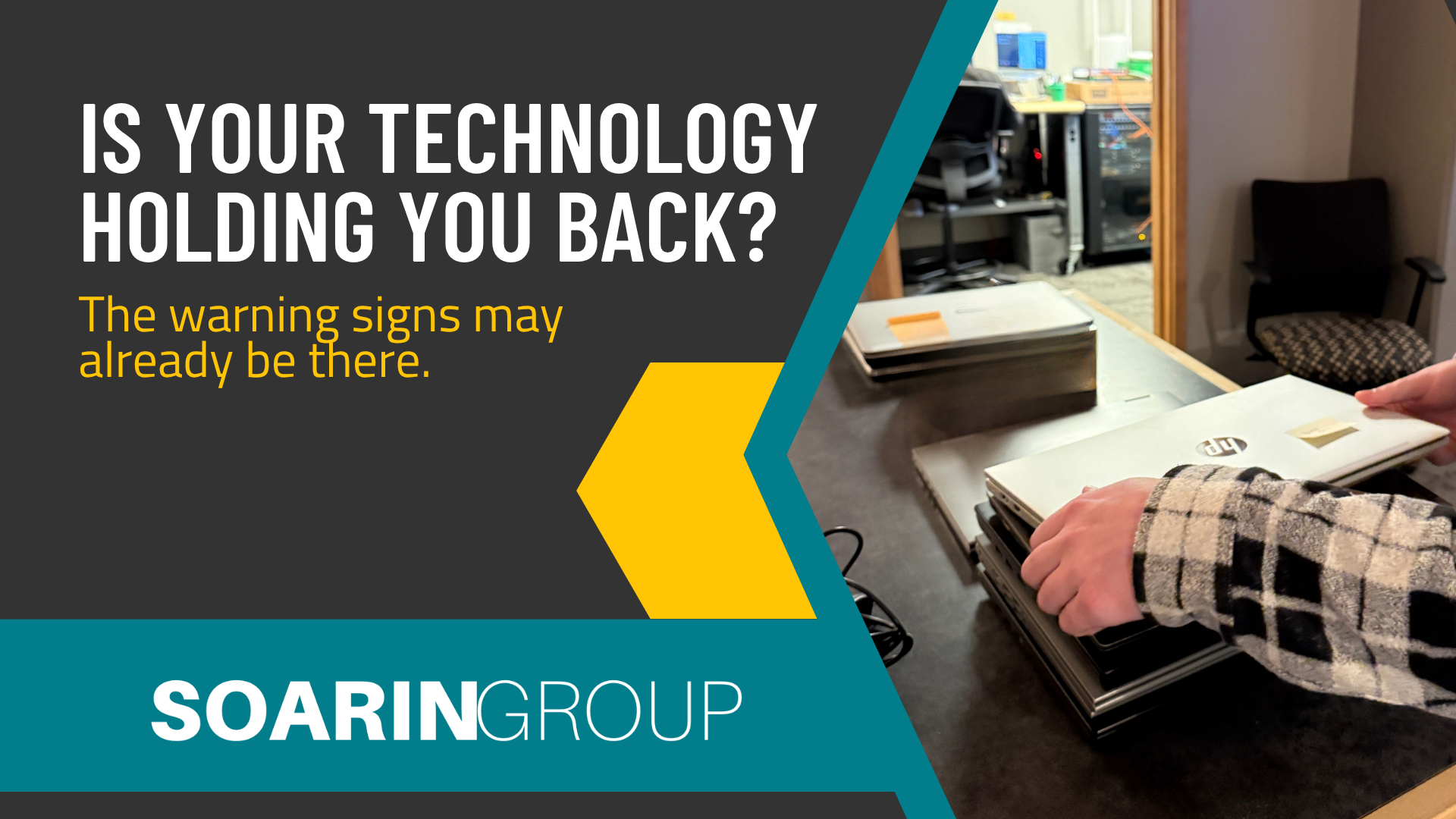
Signs Your Business Technology Is Becoming Outdated
Signs Your Business Technology Is Becoming Outdated
How to recognize the warning signs before they impact productivity, security, and growth
Technology plays a role in nearly every part of your business.
From communication and collaboration to customer service and data management, your systems help keep operations moving forward.
But as your business grows, the technology that once worked well can slowly become a barrier instead of a benefit.
The challenge is that outdated technology rarely fails all at once.
More often, the warning signs appear gradually, until small frustrations become major disruptions.
Here are some common indicators that your business technology may be due for an upgrade.
Your Team Is Constantly Dealing With Slow Systems
A few extra seconds here and there might not seem like a big deal.
But when employees spend time waiting for applications to load, files to open, or devices to restart, those delays add up quickly.
Slow performance often signals:
Aging hardware
Outdated software
Insufficient storage or memory
Overloaded systems
When technology consistently slows people down, productivity suffers.
You're Running Unsupported Software
Using outdated or unsupported software creates more than an inconvenience, it creates risk.
When software reaches its end of life, it no longer receives:
Security updates
Bug fixes
Performance improvements
That leaves your business vulnerable to cyber threats and compatibility issues.
If your organization is still relying on older operating systems or applications, it's time to start planning for what's next.
Systems Don't Work Well Together
Over time, many businesses adopt new tools without considering how they integrate with existing systems.
The result is a patchwork of applications that don't communicate effectively.
Common signs include:
Duplicate data entry
Manual workarounds
Disconnected workflows
Difficulty sharing information across teams
When systems don't work together, employees spend more time managing technology than using it.
IT Issues Are Becoming More Frequent
Every business experiences occasional technology problems.
But if your team is regularly dealing with:
Unexpected downtime
Connectivity issues
Software crashes
Repeated support requests
it may indicate that your technology environment needs attention.
Frequent disruptions are often symptoms of deeper infrastructure challenges.
Your Cybersecurity Concerns Are Growing
Older technology often lacks the security features needed to defend against modern threats.
Outdated systems can make it harder to implement:
Multi-factor authentication
Advanced threat protection
Modern access controls
Effective monitoring and reporting
If cybersecurity feels increasingly difficult to manage, outdated technology may be part of the problem.
Remote Work Feels Difficult
Today's teams need secure access to information from anywhere.
If employees struggle to collaborate remotely or access systems outside the office, your technology may no longer support the way your business operates.
Modern technology should make collaboration easier, not more complicated.
Your Technology Can't Scale With Growth
As your business evolves, your technology should evolve with it.
If adding employees, opening locations, or introducing new services creates technology challenges, your systems may be reaching their limits.
Scalable technology helps businesses grow with confidence instead of creating operational bottlenecks.
You Don't Have Visibility Into Your Technology Environment
Can you easily answer questions like:
Which devices need updates?
Who has access to sensitive information?
Where is business data stored?
Which systems create the most risk?
If not, it may be time to reevaluate your technology strategy.
Visibility is essential for making informed decisions and reducing risk.
Our Perspective at Soarin Group
At Soarin Group, we often see businesses adapt to technology limitations instead of addressing them.
Over time, those limitations create inefficiencies, increase risk, and slow growth.
The good news is that modernizing your technology doesn't have to happen all at once.
With the right strategy, businesses can upgrade systems gradually, reduce disruption, and create a stronger foundation for the future.
Because technology should help your business move forward, not hold it back.
If your systems feel slower, harder to manage, or less secure than they should, it may be time for a conversation.

How can we help?
Categories
Featured Posts
Signs Your Business Technology Is Becoming Outdated
Signs Your Business Technology Is Becoming Outdated
How to recognize the warning signs before they impact productivity, security, and growth
Technology plays a role in nearly every part of your business.
From communication and collaboration to customer service and data management, your systems help keep operations moving forward.
But as your business grows, the technology that once worked well can slowly become a barrier instead of a benefit.
The challenge is that outdated technology rarely fails all at once.
More often, the warning signs appear gradually, until small frustrations become major disruptions.
Here are some common indicators that your business technology may be due for an upgrade.
Your Team Is Constantly Dealing With Slow Systems
A few extra seconds here and there might not seem like a big deal.
But when employees spend time waiting for applications to load, files to open, or devices to restart, those delays add up quickly.
Slow performance often signals:
Aging hardware
Outdated software
Insufficient storage or memory
Overloaded systems
When technology consistently slows people down, productivity suffers.
You're Running Unsupported Software
Using outdated or unsupported software creates more than an inconvenience, it creates risk.
When software reaches its end of life, it no longer receives:
Security updates
Bug fixes
Performance improvements
That leaves your business vulnerable to cyber threats and compatibility issues.
If your organization is still relying on older operating systems or applications, it's time to start planning for what's next.
Systems Don't Work Well Together
Over time, many businesses adopt new tools without considering how they integrate with existing systems.
The result is a patchwork of applications that don't communicate effectively.
Common signs include:
Duplicate data entry
Manual workarounds
Disconnected workflows
Difficulty sharing information across teams
When systems don't work together, employees spend more time managing technology than using it.
IT Issues Are Becoming More Frequent
Every business experiences occasional technology problems.
But if your team is regularly dealing with:
Unexpected downtime
Connectivity issues
Software crashes
Repeated support requests
it may indicate that your technology environment needs attention.
Frequent disruptions are often symptoms of deeper infrastructure challenges.
Your Cybersecurity Concerns Are Growing
Older technology often lacks the security features needed to defend against modern threats.
Outdated systems can make it harder to implement:
Multi-factor authentication
Advanced threat protection
Modern access controls
Effective monitoring and reporting
If cybersecurity feels increasingly difficult to manage, outdated technology may be part of the problem.
Remote Work Feels Difficult
Today's teams need secure access to information from anywhere.
If employees struggle to collaborate remotely or access systems outside the office, your technology may no longer support the way your business operates.
Modern technology should make collaboration easier, not more complicated.
Your Technology Can't Scale With Growth
As your business evolves, your technology should evolve with it.
If adding employees, opening locations, or introducing new services creates technology challenges, your systems may be reaching their limits.
Scalable technology helps businesses grow with confidence instead of creating operational bottlenecks.
You Don't Have Visibility Into Your Technology Environment
Can you easily answer questions like:
Which devices need updates?
Who has access to sensitive information?
Where is business data stored?
Which systems create the most risk?
If not, it may be time to reevaluate your technology strategy.
Visibility is essential for making informed decisions and reducing risk.
Our Perspective at Soarin Group
At Soarin Group, we often see businesses adapt to technology limitations instead of addressing them.
Over time, those limitations create inefficiencies, increase risk, and slow growth.
The good news is that modernizing your technology doesn't have to happen all at once.
With the right strategy, businesses can upgrade systems gradually, reduce disruption, and create a stronger foundation for the future.
Because technology should help your business move forward, not hold it back.
If your systems feel slower, harder to manage, or less secure than they should, it may be time for a conversation.



