Certificate Trust Changes: What Businesses in Nebraska and Tampa Bay Should Know
 By Tom Nielsen
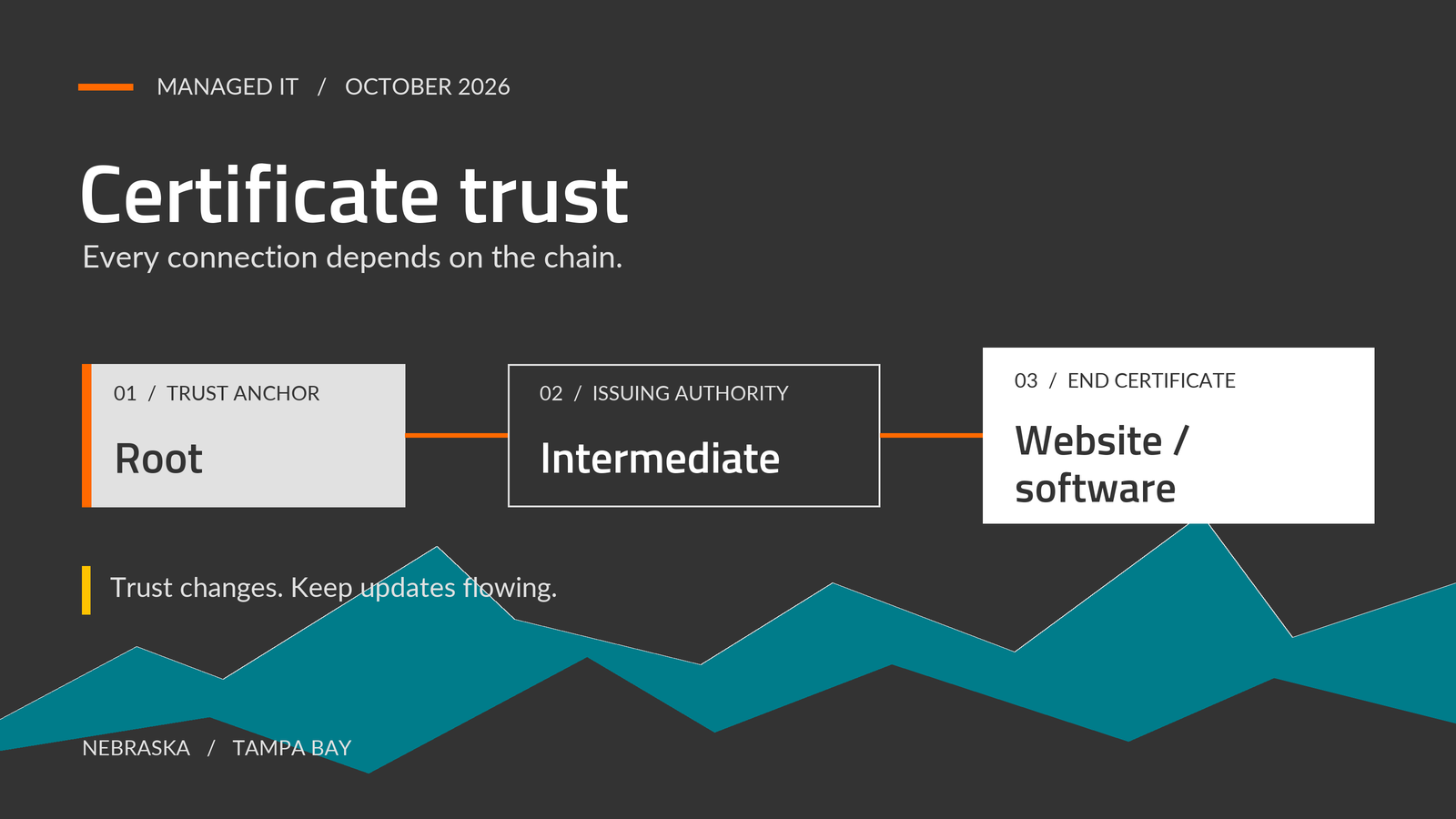
Certificate trust usually works quietly in the background. It helps a browser decide whether a website’s identity can be trusted and helps software checks establish who signed a program. When the keys behind that trust become exposed, keeping devices updated becomes a business priority.
Microsoft’s response to compromised eMudhra certificate authority keys, updated October 27, 2026, explains a series of protections and trust-list changes. For business leaders and IT teams in Nebraska and Tampa Bay, the useful questions are whether those updates can reach every device and whether any essential services depend on the affected certificates.
What Microsoft reported
Microsoft reported eight eMudhra intermediate certificate authority (CA) private keys that could be recovered: six associated with TLS, which helps secure website and service connections, and two associated with code signing. Microsoft says the issue arose in eMudhra’s certificate hierarchy; it was not a compromise of Microsoft systems.
A certificate authority helps establish trust by issuing certificates. A website or software certificate can connect through an intermediate authority to a root that a browser or operating system trusts. Possession of an intermediate authority’s private key can undermine that chain of trust.
According to Microsoft, the six TLS keys could potentially be used to impersonate a website or service and intercept communications. The two code-signing keys could make malicious software appear to come from a trusted publisher. These are risks Microsoft describes, not evidence that a particular business or customer was affected.
Separate protections with different purposes
Microsoft’s response includes several separate actions. Keeping them distinct helps IT teams understand what their update process needs to deliver.
- October 20: Windows blocking. Microsoft updated the Windows Disallowed Certificate Trust List to block the affected certificate authorities.
- Separate Edge and WebView2 blocking. Microsoft deployed a CRLSet update to block affected TLS certificates signed by the affected authorities. This arrives automatically through the component update mechanism and does not require a new browser version. It is separate from the root-trust changes below.
- October 26: Windows trust-list removal. Microsoft released an out-of-band Windows update removing seven certificates from the Windows trust list: six eMudhra G3 roots and one AAA Certificate Services cross-sign.
- October 27: Edge trust-list removal. Microsoft confirmed that the same seven certificates were removed from the Microsoft Edge trust list.
Microsoft emphasizes that removing roots from a trust list is a separate trust decision from blocking the compromised intermediates or revoking their certificates. The announcement does not say all eMudhra roots have been removed. Microsoft is evaluating the remaining eMudhra roots separately.
Why routine update management matters
An installed browser version is only part of the picture. Microsoft’s response also relies on certificate trust updates and browser component updates reaching devices. A computer that is disconnected or restricted by an update policy needs attention through the organization’s established management process.
There is a compatibility question too. Once the trust-list changes reach a device, certificates that depend on one of the seven removed certificates will no longer be trusted by default through those lists. That makes identifying dependencies useful before employees encounter a problem with a service they need.
Microsoft’s guidance calls for replacement certificates or an alternative trusted chain where those dependencies exist. For leaders, this means giving IT time to identify owners, coordinate with vendors, and check essential workflows. It does not mean every business needs to replace every certificate.
A short checklist for your IT team
The following checklist follows Microsoft’s recommendations and cautions:
- Keep Windows and Edge updates flowing. Confirm that automatic Windows certificate trust updates and Edge component updates can reach managed devices. Include disconnected Windows devices in the established update process.
- Identify affected dependencies. Review certificates used by essential websites, applications, and services to determine whether they chain to one of the seven removed certificates. Use the affected-certificate list linked in Microsoft’s announcement.
- Plan a replacement or trusted alternative chain. Where a dependency exists, coordinate with the certificate or service owner and validate the replacement against the workflows your business needs.
- Avoid restoring trust without a security assessment. Microsoft warns that software which does not reliably check revocation or the disallowed-certificate list could still accept certificates associated with the compromised intermediates if trust is kept or restored. Have the responsible security team assess that risk before considering a local exception.
For businesses in Nebraska and Tampa Bay, this is a practical reminder that patch management includes the trust information devices rely on, alongside software updates. Clear ownership and a repeatable update process help teams respond when a trusted certificate hierarchy changes.
Source: Microsoft Security Response Center — Microsoft’s response to compromised eMudhra certificate authority keys, including its October 27, 2026 update. Follow Microsoft’s current announcement for any further findings or trust changes.