Benefits Recordkeeping for Nebraska and Tampa Bay Businesses: A Practical Managed HR Checklist
Benefits records work best when updates have a clear owner and don’t get left in someone’s “I thought you had it” pile. A November 2 review from the U.S. Office of Personnel Management (OPM) offers a federal example of why enrollment records and timely updates matter.
The finding concerns the Federal Employees Health Benefits Program (FEHBP). It is not a new rule for private employers, and OPM did not report findings about Nebraska or Tampa Bay businesses. For HR teams in both regions, it can still be a prompt to check how benefits status changes move through everyday records.
What OPM reported
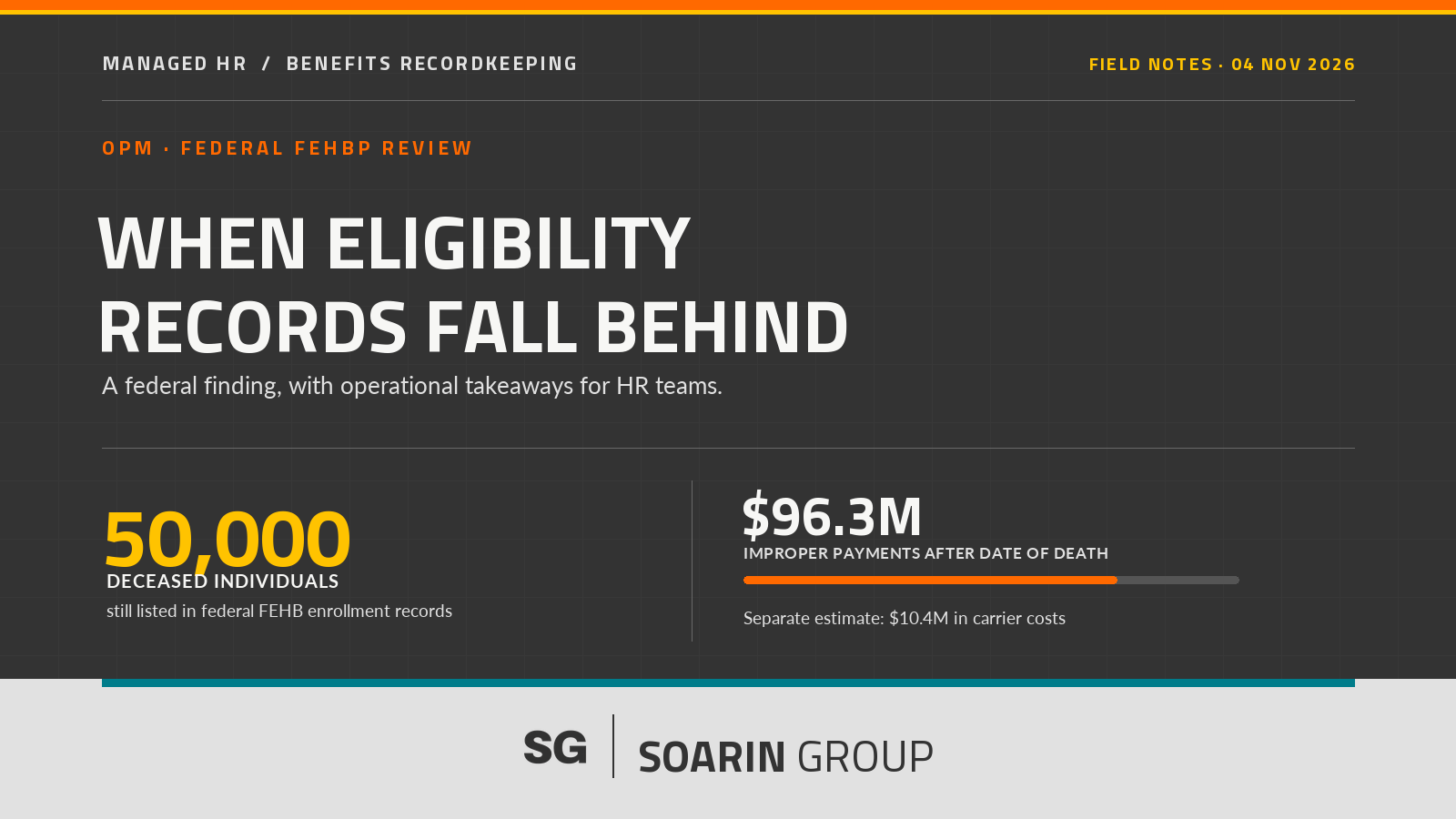
OPM said it matched Treasury’s August 2026 Death Record Confidence Scoring Tool against federal FEHB enrollment records. The review identified about 50,000 deceased individuals who remained listed.
OPM estimated $96.3 million in payments made after date of death: $70.6 million in government premium contributions and $25.7 million in retirement payments. Separately, OPM estimated $10.4 million in carrier costs tied to more than 20,000 people who remained on carrier rolls without government premium payments. OPM said it plans to examine claims that may have been paid after date of death in the coming weeks.
Those figures are OPM’s findings about a federal program. They do not describe private employer benefit plans or local businesses.
Operational takeaways for HR records
These are practical recordkeeping ideas, not legal requirements. The right process depends on the organization and its plan arrangements.
- Name an owner for each update. Make it clear who receives a status change, who updates the employer’s records, and who follows up with the benefits contact or carrier when needed.
- Move confirmed changes along promptly. Use a simple handoff so a change does not sit in an inbox while another system carries on as if nothing happened.
- Keep a useful audit trail. Record when a change was received, its effective date, who processed it, and whether a follow-up is still open. A small paper trail can save a large guessing game later.
- Reconcile records on a schedule. Periodically compare the relevant internal eligibility list with payroll deductions and carrier or administrator rosters. Give mismatches an owner and a documented resolution.
A calendar reminder and a named person can be surprisingly effective controls. They are less glamorous than a shiny dashboard, but unlike a shiny dashboard, they tend to notice a roster that has not been checked.
A steady process beats a last-minute scramble
For employers in Nebraska and Tampa Bay, the useful point is operational: know where eligibility updates start, who is responsible for each handoff, and how records are checked over time. This article is not legal or tax advice, and OPM’s federal FEHBP review does not create a private-employer rule.
Soarin Group’s Managed HR service supports businesses with HR policies, compliance needs, employee administration and workplace conversations. Explore Managed HR support to learn more.
Primary source: OPM, “OPM Review Identifies $106.7 Million in Improper Payments in FEHBP,” November 2, 2026.